
Remote Patient Monitoring in Value-Based Care: A Practical Guide for Healthcare Leaders
Healthcare organizations, ACOs, and payers are continuing to shift toward value-based care, where success depends on measurable outcomes instead of volume. To achieve this, many are turning to remote patient monitoring software development and real-time healthcare systems.
These solutions enable continuous patient tracking, early problem identification, and the delivery of the right care at the right time. This article explains how remote monitoring solutions improve both patient outcomes and financial results. It also explores specific remote patient monitoring use cases, measurable benefits for executives and payers, and the main challenges, along with practical ways to address them. Ultimately, it demonstrates why custom remote patient monitoring software is a prudent long-term investment for any organization committed to value-based care.
The Shift to Real-Time and Remote Monitoring in Value-Based Care
Traditional healthcare often reacts to problems after they happen. In value-based care, the goal is to act before issues escalate. However, many healthcare systems still rely on delayed data that limits timely decisions.
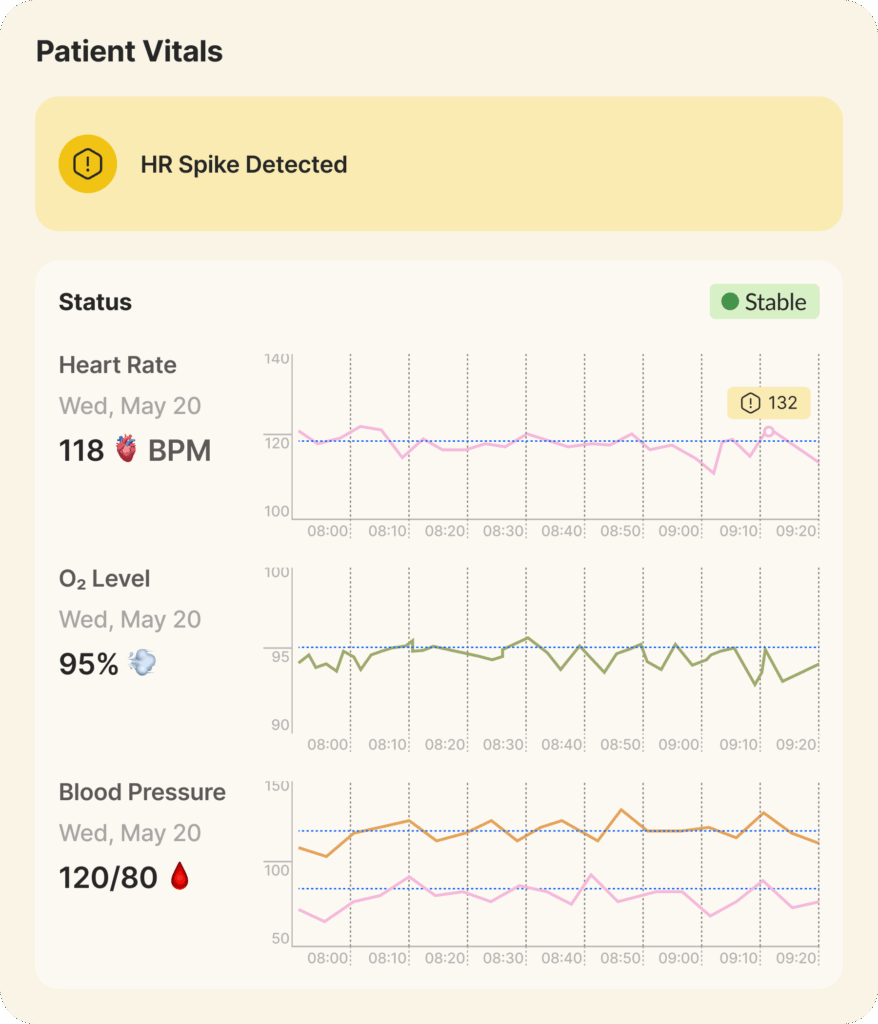
Real-time health system design changes that reality. Using connected devices, wearables, and mobile applications, remote monitoring software continuously collects and analyzes patient data. This data helps clinicians respond quickly when patient health begins to decline.
Real-time health system design changes that reality. Using connected devices, wearables, and mobile applications, remote monitoring software continuously collects and analyzes patient data. This data helps clinicians respond quickly when patient health begins to decline.
For payers and healthcare organizations, this proactive approach reduces emergency visits and hospital readmissions while improving patient safety and satisfaction.
High-Value Remote Patient Monitoring Use Cases for Value-Based Care
For leaders in healthcare and insurance, remote patient monitoring software development is not just about technology. It is about improving outcomes and reducing costs. Below are several remote patient monitoring use cases that deliver value under performance-based contracts.
1. Chronic Disease Management
Chronic illnesses such as heart failure, COPD, diabetes, and hypertension continue to drive high costs. With remote monitoring software, care teams can observe patients’ vitals in real time. If a patient’s condition begins to worsen, the system alerts the team, allowing for an early response that prevents hospitalization.
Each avoided admission represents direct savings while helping the organization meet its quality goals.
2. Post-Discharge and Transitional Care
The first month after a patient leaves the hospital is often the most risky. Remote patient monitoring solutions make it possible to track recovery and detect complications early. Nurses can check in virtually and adjust care plans as needed.
This proactive support reduces readmissions and strengthens payer and provider performance metrics.
3. Preventive and Population Health Management
Prevention is a key principle of value-based care. With remote healthcare technology, organizations can monitor large patient groups and identify trends that indicate rising risk. Care teams can then contact patients early, offer guidance, and adjust treatment before an emergency occurs.
4. High-Risk Patient Coordination
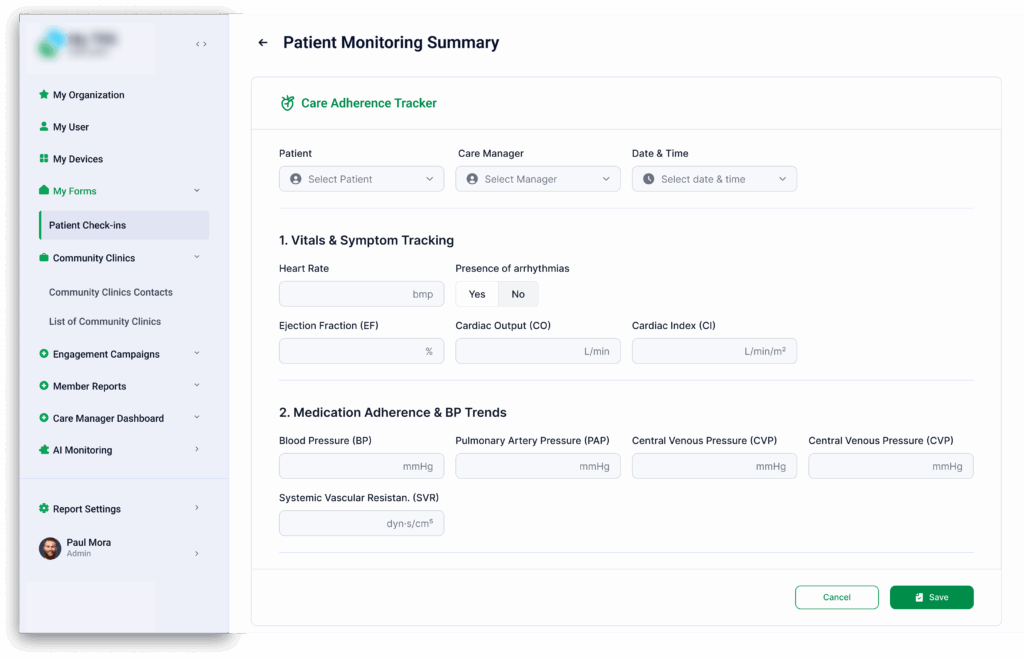
Through remote care coordination, teams can view patient data on a shared dashboard. The system highlights those who need immediate attention, allowing staff to prioritize care efficiently. This approach ensures that high-risk patients receive timely support while clinicians manage workloads effectively.
5. Hospital-at-Home and Home-Based Rehabilitation
Custom remote monitoring solutions allow hospitals to safely extend care into patients’ homes. Devices record vital signs and activity levels, while clinicians receive alerts if readings fall outside safe limits. This approach increases patient comfort, lowers costs, and keeps care quality consistent.
6. Behavioral Health and Medication Adherence
Remote patient monitoring software can also support behavioral health programs. Patients record mood changes, medication use, and symptoms through mobile applications. This information helps care teams maintain treatment consistency and address issues early.
Benefits of remote patient monitoring that matter to executives
For executives and payers, the real question is how remote patient monitoring software development impacts performance and return on investment. Below are the benefits that directly influence both clinical outcomes and financial results.
1. Lower Total Cost of Care
Early detection and timely intervention prevent costly hospitalizations and emergency visits. Over time, these savings exceed the cost of building and maintaining remote patient monitoring software.
2. Improved Quality Metrics
Value-based contracts reward consistent results. A real-time healthcare system provides continuous data, helping organizations maintain strong HEDIS and STAR ratings while improving shared-savings outcomes.
3. Greater Operational Efficiency
Automation reduces manual tasks for nurses and care managers. With remote monitoring software, data collection and triage happen automatically. Teams can monitor larger patient populations without additional staffing.
4. Better Patient Experience and Engagement
Patients appreciate convenience and proactive communication. Using remote healthcare technology, they can track progress and interact with clinicians easily. This helps enhance patient engagement and improve satisfaction and adherence.
5. Measurable ROI and Sustainability
When remote patient monitoring software companies build platforms that connect with EHR and claims systems, executives gain a clear view of performance. They can see exactly how technology investments influence both outcomes and costs.
Read about How to Implement Value-Based Care
Challenges in romote patient monitoring and how to solve them
While the benefits are clear, adopting real-time health system technology presents several operational challenges. Each one can be addressed with the right strategy.
1. Integration with Existing Systems
Challenge: Monitoring data often stays separate from EHR systems, causing inefficiency.
Solution: Use FHIR-based integration during remote patient monitoring software development. This ensures that clinicians can access all relevant data in a single workflow.
2. Data Overload and Alert Fatigue
Challenge: Real-time data can create too many alerts.
Solution: Apply smart algorithms and trend analysis to highlight meaningful changes. This keeps attention on patients who truly need help.
3. Device Reliability and Connectivity
Challenge: Device failures and poor connections disrupt data flow.
Solution: Choose reliable devices with error detection. Implement offline data storage that syncs automatically once the connection returns. This keeps your real-time health system stable.
4. Patient Engagement and Adherence
Challenge: Patients may stop using devices after the initial setup.
Solution: Design easy-to-use interfaces, send regular reminders, and include education features that enhance patient engagement. Simplicity and clear communication encourage continued participation.
5. Privacy and Security
Challenge: Managing personal health data remotely increases security risks.
Solution: Partner with experienced remote patient monitoring software companies that follow HIPAA and GDPR compliance. Use encryption and role-based access controls throughout your remote monitoring software.
6. Financial Justification
Challenge: Leaders must see financial proof before scaling RPM.
Solution: Link remote patient monitoring use cases to measurable outcomes such as fewer readmissions and lower care costs. Document improvements during pilot projects to build a strong business case for expansion.
Why Custom Remote Patient Monitoring Software Development Wins in Value-Based Care
Many organizations face a choice between buying off-the-shelf systems or building custom ones. For value-based care, custom remote patient monitoring software development offers the flexibility and control that long-term success requires.
1. Designed Around Your Care Model
Every organization manages patients differently. Custom remote healthcare technology allows your unique workflows, reporting metrics, and care protocols to shape the platform rather than forcing your teams to adapt to someone else’s system.
2. Full Data Ownership and Integration
Owning your remote patient monitoring solutions gives you complete control of data and connections. It lets you integrate with existing EHRs, claims systems, and analytics tools without limitations or vendor lock-in.
3. Scalability and Security
A well-designed real-time healthcare system grows as your patient base expands. Security features such as encryption, user authentication, and continuous monitoring protect sensitive information.
4. Advanced Analytics and Insights
Custom solutions can include predictive analytics that identify risk trends and forecast resource needs. These insights support better decisions and align with your financial and clinical goals.
5. Long-Term Return on Investment
Custom remote patient monitoring software development allows you to adapt quickly to new payer requirements or changes in care delivery. Over time, the system becomes a sustainable asset that supports your entire organization.
Read more about our service: Remote Patient Monitoring Software for Value-Based Care
Why Partner with Sigma Software for Remote Patient Monitoring Solutions
We Understand Healthcare Operations
Our company focuses entirely on healthcare software development. We build technology that supports real clinical and operational workflows, not just abstract systems. Our teams have worked with EHRs, claims platforms, care management systems, and population health tools. We understand how care teams work day to day and how their actions affect value-based performance.
Because we speak the language of clinicians, payers, and analysts, we know how to connect technology with the key drivers of value-based care: fewer readmissions, closed care gaps, better utilization management, and accurate risk adjustment.
Discovery Comes First
Every partnership begins with a structured discovery phase. During this stage, we take time to understand your current operations and goals before writing a single line of code.
We:
- map existing data sources and assess data quality,
- document how care teams currently deliver care and where bottlenecks exist,
- define metrics and outcomes tied to value-based contracts, and
- create a technical and regulatory gap analysis.
This approach gives leadership clear visibility into the scope, risks, and costs before committing to full-scale remote patient monitoring software development. It helps align internal teams and reduces uncertainty for both clinical and financial stakeholders.
Outcome-Based Development
Our work is guided by measurable outcomes. We define success metrics early, deliver a minimum set of features that generate real results, and then expand based on evidence.
Each milestone is transparent. We share progress reports that show how each release contributes to care quality, efficiency, and financial performance. This model ensures that your investment in remote monitoring software delivers practical value—not just technical output.
Custom, Scalable, and Maintainable Solutions
We design every remote patient monitoring software solution using modular architecture and API-first integration. This allows your organization to adapt and scale without replacing entire systems.
You maintain full control of your infrastructure and can easily evolve your platform as payer requirements or care models change. This keeps your costs predictable and your data accessible.
Compliance and Governance Built In
Security and compliance are part of our foundation. From the start, we implement data encryption, audit trails, and user access controls that meet HIPAA and other healthcare regulations.
We also document governance standards and collaborate with your compliance team to ensure that the final remote healthcare technology solution meets internal and external expectations.
Supporting Adoption and Change
Technology only works when people use it effectively. We help with clinician onboarding, create decision-support interfaces that match existing workflows, and develop dashboards that display the metrics leaders care about most.
This approach improves adoption and makes sure that your remote patient monitoring solutions are fully integrated into daily operations.
Transparent Terms and Lasting Partnership
We believe that you should own your data, models, and systems. Our contracts clearly outline the total cost of ownership for both pilot and production phases, helping you plan confidently. We avoid vendor lock-in and prioritize flexibility so you can manage your platform on your own terms.
In short, we are a healthcare-focused software development partner that combines technical skill with operational understanding. We help you move from concept to measurable outcomes through a discovery-first and outcome-based approach that leadership teams can rely on.
Want to see what this looks like in practice? Let’s talk.
It is a platform that collects and shares health data from connected devices so care teams can track patients continuously and respond when conditions change.
It prevents avoidable hospitalizations, supports better outcomes, and improves contract performance.
Yes. Custom remote patient monitoring software companies use integration standards to link EHRs with live patient data.
It can monitor vitals such as blood pressure, heart rate, oxygen levels, glucose, and weight as well as patient-reported outcomes.
Yes. Proper remote monitoring software includes encryption, access controls, and compliance with healthcare privacy regulations.
Ready to Solve Your Value-Based Care Challenge?
Let’s talk about your unique workflows and design a custom digital health solution that supports outcome-based care, improves population health, and aligns with value-based reimbursement models.
Whether you’re navigating HEDIS metrics, improving care coordination, or optimizing performance-based contracts, we can help.
Build Your Custom Implementation Plan
Your implementation plan includes integrations, MVP timelines, and long-term support strategies. We build your value-based care solution around real workflows, compliance requirements, and measurable outcome goals.
Launch and Optimize for Outcome-Based Development
Our solutions combine predictive analytics, AI-driven clinical insights, and secure, interoperable data flows. Whether you need compliance tools, shared savings tracking, or a care coordination engine, we align it with your quality metrics, reimbursement goals, and care delivery model.
Ready to Improve Outcomes with Custom Value-Based Solutions?
We design and build custom software for value-based healthcare, built around your data, workflows, and objectives. Whether you need to unify data, support attribution, or track performance across contracts—we’re here to build what works.
Checklist for Healthcare Organizations in 2026: Preparing for Value-Based Care
Care Coordination Software: Key to Unlocking Value-Based Care for Providers and Payers
Patient Engagement Solutions for Hospitals: Custom Software to Accelerate Value-Based Care
Preparing for the CMS TEAM Model: Practical steps for payers and hospitals — value based care in us healthcare
Medical Claims Management Software for Value-Based Care: How Insurance Companies Can Simplify the Transition
IoT Healthcare Solution Software Development for Value-Based Care
Stay in the loop with everything you need to know.