
Telemedicine software development for value-based care
Leaders at health systems, ACOs, and payers increasingly ask how to move from fee-for-service to value-based care while keeping costs down and outcomes up. Custom telemedicine software development and connected remote patient monitoring (RPM) are practical tools that support this shift. They improve access, reduce readmissions, and support care coordination when integrated tightly with EHRs and quality-measure workflows.
Research shows remote monitoring and telehealth can lower readmissions and improve clinical outcomes for many chronic conditions. In this article, we explain concrete telehealth use cases for value-based models, quantify benefits and costs, identify common technical and clinical challenges, and offer practical solutions. Finally, we explain why choosing an outcome-based delivery vendor for telehealth software development reduces implementation risk and speeds value realization.
Why telemedicine software development matters for value-based care
Top managers want measurable results: fewer avoidable admissions, better chronic disease control, and predictable cost per member. Off-the-shelf tools sometimes help but often fail to map cleanly to specific clinical workflows, quality measures, or payer contracts. That is why telemedicine software development matters: custom software lets organisations design virtual care pathways that align with their population health targets and contract metrics, track outcomes automatically, and close care gaps at scale.
Custom telemedicine app development ties virtual visits, RPM devices, claims/quality data, and clinician workflows into one platform, which is essential to make value-based contracts predictable and auditable.
Read about How to Implement Value-Based Care
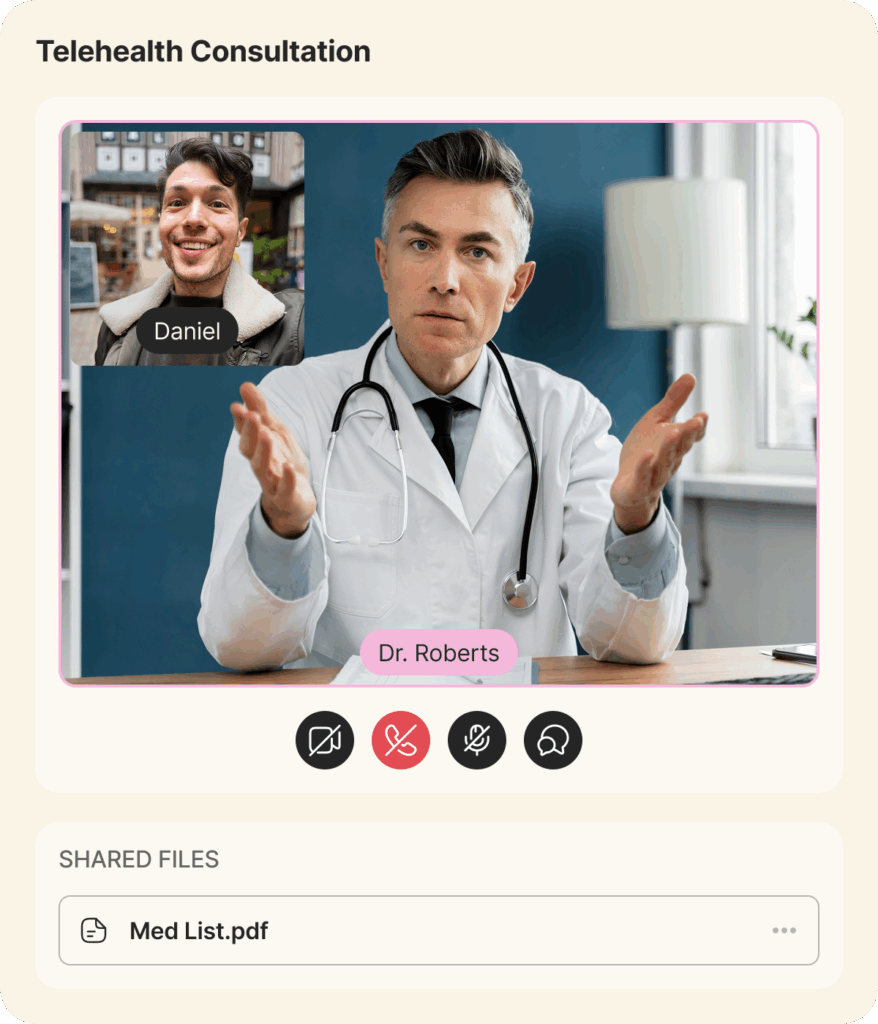
Key telehealth use cases that drive value in value-based care
Below are practical, evidence-backed use cases where telehealth and associated software produce measurable value.
1. Remote patient monitoring for chronic disease management
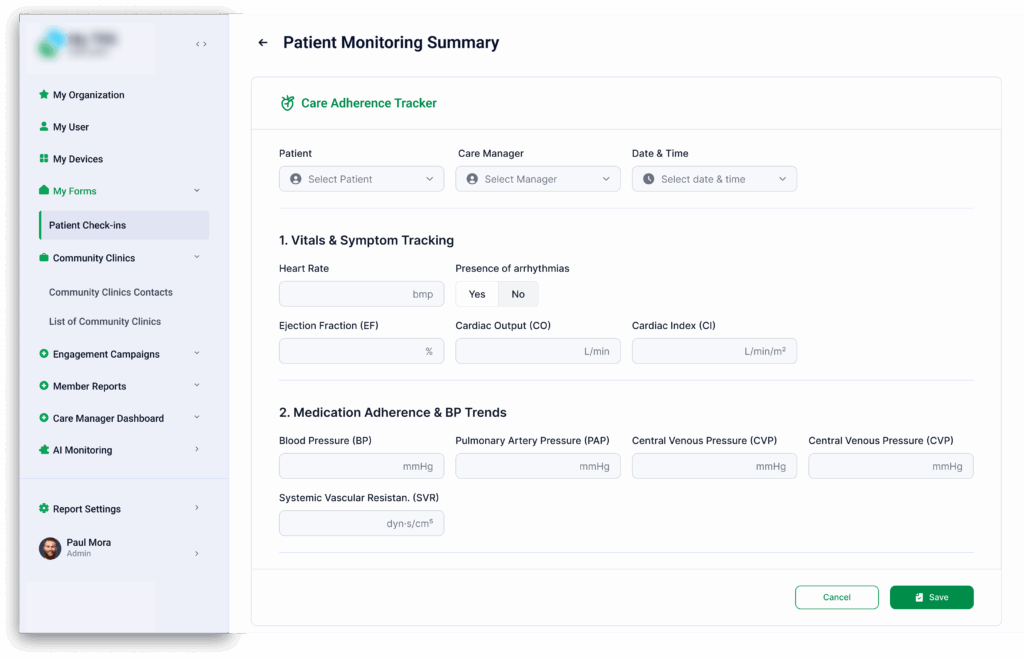
Use case: Continuous or scheduled monitoring for heart failure, COPD, diabetes, and hypertension with device integration, automated alerts, and structured care pathways.
Why it helps: Timely data allows early intervention, which reduces emergency visits and 30-day readmissions. Several recent studies and systematic reviews report lower hospitalization and improved clinical markers with RPM programs.
2. Post-discharge follow-up and transitional care
Use case: Scheduled tele-visits and RPM in the two to four weeks after discharge to catch complications and ensure medication adherence.
Why it helps: Studies show telehealth-based follow-up reduces readmissions when it is timely and integrated with discharge planning.
3. Medication management and adherence programs
Use case: Pharmacist-led telehealth for high-risk patients with polypharmacy, with medication reconciliation and remote check-ins.
Why it helps: Interventions that improve medication management have produced cost savings and lower utilization in ACO settings.
4. Behavioral health access and integration
Use case: On-demand and scheduled behavioral health visits that are coordinated with primary care and care managers.
Why it helps: Tele-therapy improves access and continuity, which supports holistic outcomes tracked in value-based contracts. Evidence shows improved engagement and similar clinical outcomes compared with in-person care for many conditions.
5. Specialist consults and care coordination across networks
Use case: Virtual specialist reviews that prevent unnecessary transfers and optimize case management for complex patients.
Why it helps: Faster specialist access reduces delays in care and keeps patients in the most appropriate care setting.
Read more about our service: Telehealth for Value-Based Care
Benefits of telemedicine software development for health systems
With the right telehealth software development company, when built and deployed correctly, telehealth platforms deliver measurable benefits.
Better outcomes, lower avoidable utilization
Research shows RPM and targeted telehealth reduce hospitalizations and ED visits for specific patient groups, which directly supports shared savings and downside-risk contracts. For example, home digital monitoring has been associated with reductions in hospitalization and ED visits at 3 and 6 months.
Stronger quality-measure performance and reporting efficiency
Tying telehealth encounters and device data to electronic quality measures reduces manual charting and supports real-time performance dashboards. CMS and other payers increasingly accept digital sources for quality programs.
Improved access and patient experience
Telehealth reduces travel burden and makes follow-up easier for high-risk or mobility-limited patients. This improves patient satisfaction and adherence, both of which are rewarded in VBC contracts.
Potential cost savings and better resource allocation
When telehealth is focused on right-sized care, it can avoid high-cost care episodes and reduce non-value visits. Several economic reviews and real-world deployments report notable savings when telehealth is used strategically.
Challenges in value-based care telehealth — and practical solutions
Implementations fail when teams underestimate technical complexity, clinician workflows, and measurement needs. Here are common challenges in telemedicine platform development and how to solve them.
1. Interoperability and data fragmentation
Problem: Devices, telehealth platforms, and EHRs often speak different languages, which creates manual work and data gaps.
Solution: Implement HL7 FHIR-based APIs, use standardized device data ingestion pipelines, and design normalized data models so telehealth events, vitals, and patient-reported outcomes flow into the EHR and analytics layer. This reduces duplication and supports automated quality measurement. Standards such as FHIR are already widely used to solve integration issues.
2. Clinical workflow alignment
Problem: Clinicians face alert fatigue, unclear responsibilities, and workflows that are not embedded in clinical systems.
Solution: Co-design workflows with frontline clinicians, implement tiered alerts (low, medium, high), and automate care pathways. For example, low-risk RPM alerts can trigger asynchronous messaging to a care manager while high-risk alerts generate a same-day tele-visit. Track clinician time and outcomes to refine the process.
3. Data governance and privacy
Problem: Remote monitoring and third-party devices generate sensitive data and require HIPAA-compliant handling.
Solution: Architect platforms with end-to-end encryption, role-based access control, audit logs, and business associate agreements. Use certified cloud services and conduct penetration testing and privacy impact assessments.
4. Reimbursement and regulatory uncertainty
Problem: Telehealth reimbursement rules vary by payer and change over time.
Solution: Build flexible billing modules in the telehealth platform that support modifier codes, place-of-service fields, and automated claims attachments. Track policy changes and maintain a compliance layer that can toggle features as rules change.
5. Measurement and attribution
Problem: Value-based contracts require rigorous attribution of outcomes and costs to interventions.
Solution: Create an outcomes data pipeline that links telehealth events to utilization, lab results, and claims. Use risk adjustment and pre-specified windows for attribution. Use the platform to export audit-ready reports for payers and contracting partners.
Technical architecture patterns that work
Successful telehealth platforms commonly follow these modular, standards-based patterns.
- Device and RPM ingestion layer: secure device connectors, message queueing, and cleansing.
- Integration layer: FHIR API gateway, HL7 interfaces, SMART on FHIR for EHR apps.
- Care orchestration engine: rules-based routing, workflow, and escalation paths.
- Outcome analytics: real-time dashboards, cohort reports, and exportable quality measure outputs.
- Patient-facing apps: scheduling, video, messaging, and digital consent flows.
- Security and compliance: encryption, audit trails, and identity federation.
Why custom telehealth software development rather than buy-and-configure
Custom telemedicine software development services are not always necessary, yet for many value-based models, it is the fastest path to measurable impact. Here is why.
- Matches contracts and metrics: Custom platforms can produce the exact reports and data structures your ACO or payer needs for reconciliations and shared-savings audits.
- Integrates legacy systems: Health systems often have aged EHR modules or local data stores. Custom integration avoids forcing clinical teams to change systems overnight.
- Enables differential care pathways: Different member segments need different touchpoints. Custom development supports segmentation, escalation logic, and bespoke clinician dashboards.
- Protects competitive differentiation: Your care model is an asset. Custom software preserves intellectual property and enables rapid iteration.
Why choose Sigma Software for telemedicine software development
Choosing the right telemedicine software development company is the first step to building a good telemedicine solution. We build telehealth solutions for value-based care with outcome accountability. Our approach includes the following commitments.
1. Outcome-based delivery, guaranteed focus on measurable results
We structure engagements around agreed clinical and financial KPIs, for example, reductions in 30-day readmissions or improvements in HEDIS-like measures. This keeps technical work tightly tied to value.
2. Deep domain experience in ACOs and payer workflows
We have delivered RPM, tele-visit, and care coordination platforms that integrate with major EHRs and support quality reporting. Our teams include clinical informaticists and population health analysts who help set thresholds, escalation rules, and measure definitions.
3. Standards-first interoperability
We use HL7 FHIR and SMART on FHIR to ensure rapid, reliable integration and future-proof the platform. This reduces long-term maintenance and avoids vendor lock-in.
4. Security and compliance by design
We design for HIPAA and common regional regulations, with secure device onboarding, role-based access, and thorough testing.
5. Practical pilots that scale
We run focused pilots to prove clinical and financial assumptions, then industrialize the solution for enterprise scale. Pilots typically target the highest-risk cohorts where lift can be measured quickly.
6. Professional services for adoption and change management
We embed training, clinician playbooks, and data governance support. Implementation is not just software; it is a process change.
Want to see what this looks like in practice? Let’s talk.
Yes, when telemedicine and RPM are part of structured post-discharge programs with clear escalation rules and integration into care teams. Multiple studies report reductions in readmissions and ED visits for targeted cohorts. Outcomes depend on patient selection, device choice, and clinician workflows.
A focused MVP can be delivered in three to five months, with scale-up over the following six to twelve months. The timeline depends on integration complexity, device procurement and internal change management.
Not always. Many programs use a mix: patient smartphones for videoconference and patient-reported outcomes, plus selected devices such as blood pressure cuffs, weight scales, or pulse oximeters for higher-risk patients. Device selection should match clinical goals.
Measure both clinical outcomes (readmissions, A1c, BP control) and financial metrics (per-member-per-month cost, avoidable admissions, total cost of care). Attribution windows and risk adjustment are essential to ensure fair comparisons.
Ready to Solve Your Value-Based Care Challenge?
Let’s talk about your unique workflows and design a custom digital health solution that supports outcome-based care, improves population health, and aligns with value-based reimbursement models.
Whether you’re navigating HEDIS metrics, improving care coordination, or optimizing performance-based contracts, we can help.
Build Your Custom Implementation Plan
Your implementation plan includes integrations, MVP timelines, and long-term support strategies. We build your value-based care solution around real workflows, compliance requirements, and measurable outcome goals.
Launch and Optimize for Outcome-Based Development
Our solutions combine predictive analytics, AI-driven clinical insights, and secure, interoperable data flows. Whether you need compliance tools, shared savings tracking, or a care coordination engine, we align it with your quality metrics, reimbursement goals, and care delivery model.
Ready to Improve Outcomes with Custom Value-Based Solutions?
We design and build custom software for value-based healthcare, built around your data, workflows, and objectives. Whether you need to unify data, support attribution, or track performance across contracts—we’re here to build what works.
Custom Software for Aesthetic Clinics: Overcoming Digital Growth Challenges
Solving the 5 Core Data Infrastructure Problems in Diagnostics
3 AI Execution Gaps Slowing Down Medical Distribution
Resolving Fragmented Clinical Data in Biotech
The 7 Core IT Engineering Bottlenecks in Clinical Stage Biotech (And How to Resolve Them)
Where AI Actually Works in Biotech: Clinical Trials, Genomics, and Drug Discovery
Stay in the loop with everything you need to know.