
Healthcare Software Case Studies
Explore our work across digital health, EHR systems, and patient-centered platforms designed to meet the technical demands of modern medicine.
Every project here started with a specific technical or operational challenge. We focus on building secure, HIPAA-compliant systems that integrate into existing medical workflows. Below, you will see the systems we have built and the technical expertise applied to solve complex problems for providers and digital health companies.
Reliable Software Solutions for Healthcare Organizations
Our work in healthcare focuses on creating systems that align with clinical workflows. We specialize in value-based care solutions, AI-driven platforms, and seamless interoperability. By combining domain knowledge with modern engineering, we deliver systems that help providers and payers operate more efficiently while protecting patient data.
AI Data Foundation for Value-Based Care
Client: US Healthcare Organization
Overview
To unlock the potential of AI in value-based care, data must be reliable, structured, and compliant. Our client had access to large volumes of healthcare data but lacked the foundation needed to support predictive analytics. We helped them prepare their data environment for scalable and compliant AI adoption.
The Challenge
Data was fragmented across EHRs, claims platforms, and care management systems. In addition, inconsistent definitions and data quality issues made analytics unreliable. At the same time, missing governance raised compliance concerns around PHI handling, and leadership lacked confidence in the trustworthiness and auditability of AI models.
The Solution
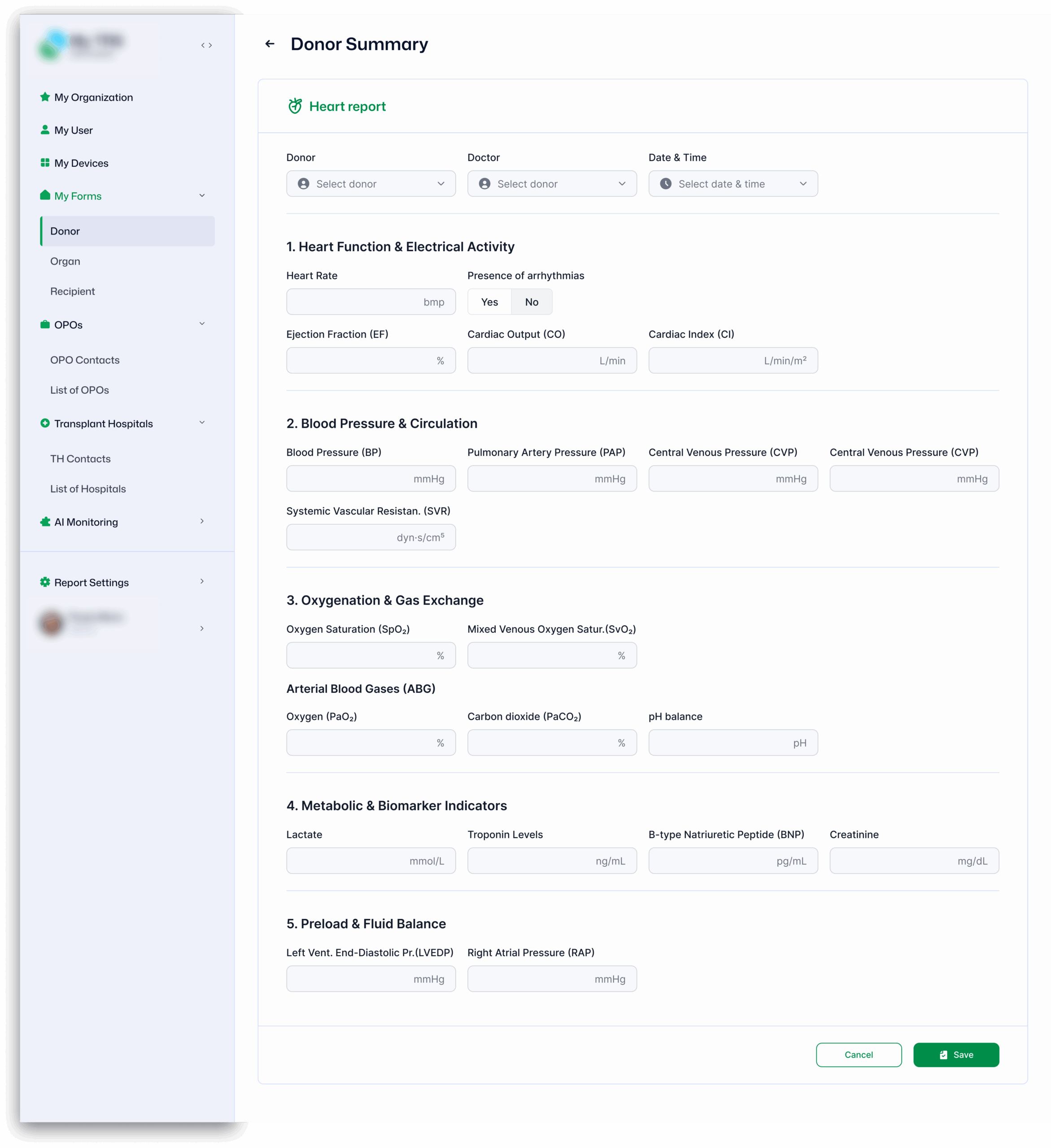
We started with a comprehensive AI readiness assessment, evaluating data quality, structure, governance, and compliance. Based on these findings, we unified clinical, claims, and operational data into standardized, AI-ready models aligned with FHIR.
To ensure reliability, we implemented governed ETL pipelines with embedded metadata, lineage tracking, and validation controls. At the same time, security was strengthened through role-based access, encryption, and audit logging for PHI and PII. Finally, we introduced an integration layer connecting EHRs, payer systems, and analytics platforms, which enabled the deployment of predictive models for risk stratification and care management.
Value Delivered
- 38% reduction in data quality errors across clinical and claims datasets
- 45% reduction in AI model preparation time
- HIPAA-compliant data governance implemented across all AI pipelines
Telemedicine & Patient Monitoring App
Client: Digital Health Product Company
Overview
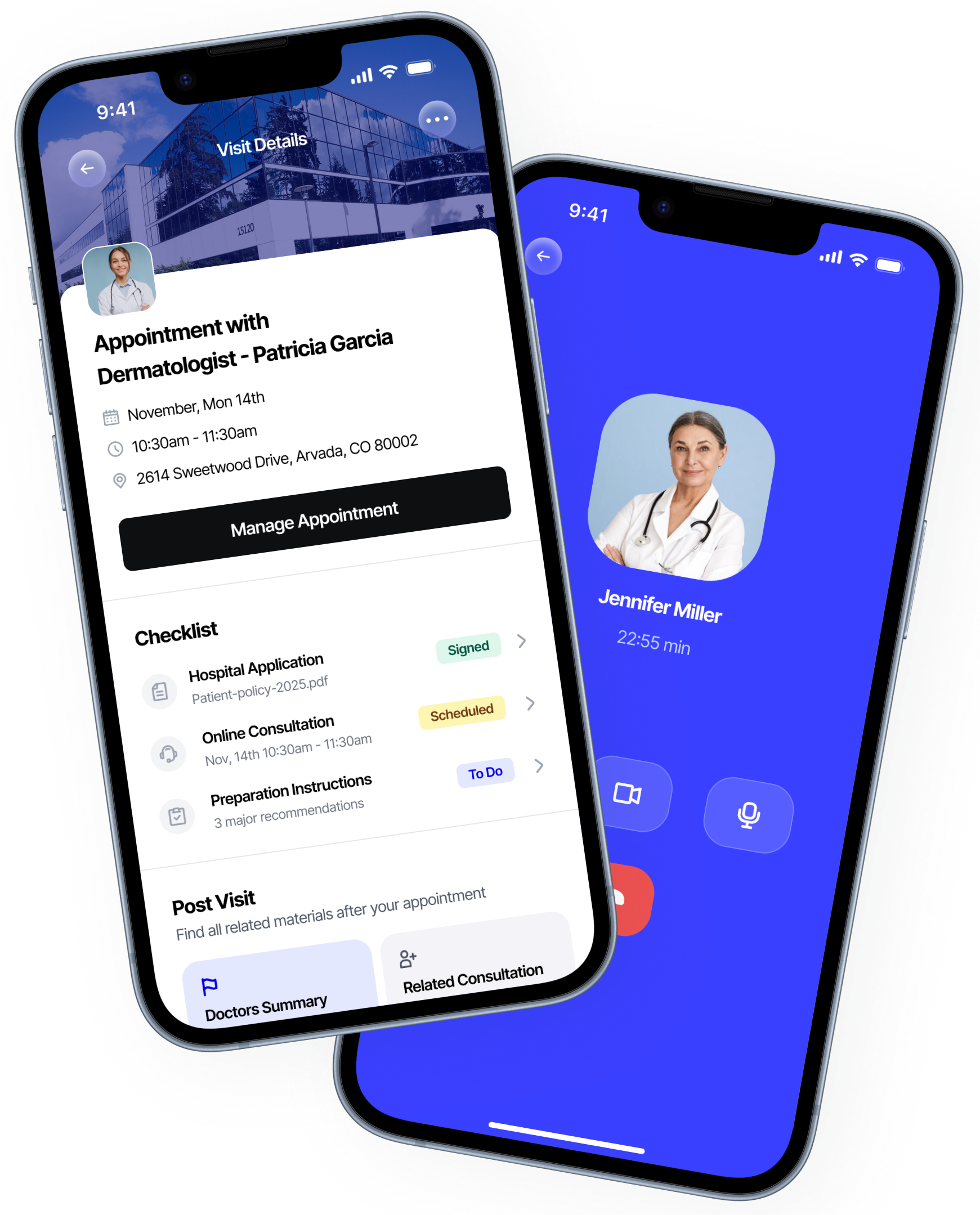
Expanding access to care requires digital solutions that are both intuitive and clinically reliable. Our client set out to build a telemedicine application designed to improve access, engagement, and remote monitoring. We helped bring this vision to life with a user-friendly platform.
The Challenge
The client needed to balance usability with clinical and regulatory requirements. Doctors required reliable access to patient data, scheduling, and prescribing tools during virtual visits, while patients needed clear health insights and simple tracking. In addition, secure data transmission, stable video consultations, and integration of medical records across devices were critical.

The Solution
We developed a mobile telemedicine app that supports real-time video consultations and secure messaging, forming the core of the experience. Around this, we built patient health tracking capabilities for vital signs, habits, and wearable device data, along with comprehensive patient profiles that combine medical history, lifestyle data, and measurements.
To enhance care delivery, AI-assisted insights were introduced to provide personalized health tips and preventive guidance. At the same time, a doctor dashboard enabled efficient patient management, scheduling, and task tracking. The platform also included e-prescriptions, billing, invoicing, and insurance request handling. All of this was supported by secure authentication, encrypted data transmission, and cross-device compatibility, including smartphones, smartwatches, and widgets.
Value Delivered
- Increased patient engagement
- Reduced operational overhead
- Improved adherence to treatment plans
Patient Engagement for Medicaid VBC
Client: US Managed Care Organization
Overview
Engaging Medicaid populations in value-based care requires more than traditional outreach. Our client needed a scalable way to connect with members, improve adherence to chronic care plans, and reduce avoidable hospital utilization. We partnered with them to design and implement a personalized engagement platform integrated into their existing care ecosystem.
The Challenge
The organization struggled with low member participation in care plans and had limited visibility into adherence behavior outside clinical settings. At the same time, care teams lacked timely insights into risks that could lead to preventable readmissions. Existing systems did not support proactive outreach or effectively link engagement efforts to quality metrics such as HEDIS and STAR ratings.

The Solution
To address these challenges, we designed a member engagement platform built around personalized care journeys. First, we enabled risk stratification using both claims and clinical data, allowing care teams to identify and prioritize high-risk members. Building on this, the platform delivered multilingual messaging, reminders, and digital check-ins tailored to individual needs, making outreach more relevant and timely.
At the same time, we ensured seamless integration with EHR and care management systems so that engagement activities were fully aligned with ongoing care processes. Finally, we introduced reporting dashboards that linked engagement efforts to quality and utilization metrics, giving teams a clear, continuous view of impact.
Value Delivered
- 18% reduction in avoidable hospital readmissions
- 26% increase in chronic care plan adherence
- 21% improvement across selected HEDIS measures
- Over 85% of active members reached through digital engagement
Shared Savings Platform for ACOs
Client: Regional Accountable Care Organization
Overview
As participation in value-based care programs grows, accurate attribution and transparent performance tracking become essential. Our client needed a reliable way to connect outcomes, costs, and provider performance while automating shared savings calculations. We delivered a platform that supports fair reimbursement and real-time insights.
The Challenge
The organization relied on manual reporting processes and inconsistent attribution logic. At the same time, outcomes, costs, and utilization data were not linked at the care episode level, which led to delays and disputes in shared savings calculations. Providers also lacked timely visibility into their performance under value-based contracts.

The Solution
We began by integrating claims, EMR, and quality data into a single platform, creating a consistent foundation for analysis. Building on this, we introduced episode-level cost and outcome tracking, allowing the organization to connect performance across different care settings.
To ensure fairness and alignment with regulatory requirements, we implemented configurable provider attribution models aligned with CMS programs. At the same time, shared savings calculations and distribution logic were automated, significantly reducing manual effort and the potential for errors. Finally, role-based dashboards were introduced, giving both providers and administrators clear, real-time visibility into performance.
Value Delivered
- 60% reduction in time required for shared savings reporting
- 95% accuracy in episode-level provider attribution
- 22% increase in provider satisfaction with performance transparency
- Near real-time tracking enabled across value-based contracts
Custom Healthcare Software Platform
Client: Multi-Specialty Healthcare Provider Network
Overview
Managing clinical and administrative workflows across a multi-specialty network requires both flexibility and control. Our client needed to improve efficiency, interoperability, and compliance without disrupting ongoing care delivery. We developed a suite of custom solutions integrated into their existing environment.
The Challenge
Manual workflows for prior authorization, care coordination, and claims processing created delays and administrative burden. In addition, data quality varied across systems, limiting reliable analytics and reporting. The EHR was overloaded with non-clinical tasks, while legacy applications made it difficult to introduce new functionality without disrupting operations.

The Solution
We started by introducing custom care coordination tools that integrate directly with the existing EHR, reducing reliance on manual processes. At the same time, prior authorization was automated using rules-based validation and payer integration, improving speed and accuracy.
Next, we enhanced claims processing with auditable workflows and reconciliation logic, ensuring transparency and compliance. Patient engagement solutions, including portals and secure messaging, were also implemented to improve communication and access. To support reliable analytics, governed data models were introduced with validation and lineage tracking. Finally, API-based integrations using FHIR, HL7, and X12 standards enabled interoperability, while legacy systems were modernized incrementally through phased rollout patterns.
Value Delivered
- 32% reduction in prior authorization turnaround time
- 25% decrease in administrative workload for care teams
- 29% increase in patient portal adoption within the first year
Healthcare Booking & Experience Redesign
Client: Multi-Location Healthcare Network
Overview
The patient journey often starts with booking an appointment, and a poor experience at this stage can impact everything that follows. Our client needed to improve how patients book services and interact with care teams across web and mobile channels. We redesigned the experience to make it simpler, clearer, and more efficient.
The Challenge
The existing digital experience suffered from high drop-off rates during appointment booking, unclear pricing, and limited automation. Patients struggled to choose services, understand costs, and complete bookings without staff assistance. At the same time, manual processes for scheduling, paperwork, and communication increased workload and slowed response times.
The Solution
We began by redesigning the booking flow to reduce friction, introducing fewer steps, multi-service selection, and clear calls to action. At the same time, pricing and service descriptions were made transparent and accessible early in the process, helping patients make informed decisions.
To improve usability, we adopted a mobile-first UX approach supported by a web experience optimized for conversion and app adoption. Self-service tools were introduced for rescheduling, cancellations, and digital document handling, reducing reliance on staff. Automated reminders via SMS and email helped minimize no-shows, while AI-supported chat provided real-time assistance. Finally, a centralized data platform enabled coordination across departments and supported future scalability, including CMS migration.
Value Delivered
- 31% reduction in booking flow drop-offs
- 55% improvement in appointment completion rate
Personal Health Tracking Platform
Client: Health Technology Startup
Overview
Making health data meaningful for everyday users requires clarity, simplicity, and engagement. Our client wanted to create a platform that brings essential health metrics into a single experience. We delivered a solution that makes personal health tracking both accessible and engaging.
The Challenge
Existing health apps often overwhelm users with fragmented metrics and unclear insights. As a result, users struggle to stay engaged over time. The client needed a solution that presents complex data in a simple and motivating way, while also working seamlessly across mobile devices, smartwatches, and web platforms.

The Solution
We developed a mobile health tracking app that consolidates key wellness metrics into one intuitive interface. To make data more meaningful, we introduced an interactive 3D body map that provides focused insights by body part. In addition, dynamic health graphs were implemented to help users visualize trends, progress, and goals over time.
To extend functionality, a web-based platform was created, offering expanded dashboards and deeper analytics. Integration with Apple Watch enabled real-time metrics and alerts, while features such as oxygen testing provided immediate feedback and results visualization. Finally, gamified test result screens were introduced to encourage ongoing engagement and regular interaction with the platform.
Value Delivered
- Increased daily user engagement
- Improved health awareness
- Stronger user retention
Healthcare Data Platform Modernization
Client: US Healthcare Organization
Overview
Operating under value-based care contracts requires a data platform that can scale, adapt, and deliver timely insights. Our client relied on a legacy system that limited growth and performance. We modernized their data platform to support current needs and future expansion while preserving critical business logic.
The Challenge
The legacy platform limited scalability and slowed the introduction of new data sources and reporting capabilities. At the same time, clinical, claims, and quality data were fragmented, preventing a unified view of performance. Outdated infrastructure and limited audit controls also increased compliance risk and made it difficult to meet reporting timelines.
The Solution
We approached modernization in a way that avoided service disruption, first redesigning the platform architecture while preserving existing functionality. From there, we migrated the system securely to AWS, ensuring high availability and disaster recovery.
Next, we introduced scalable data storage and processing layers to support analytics and reporting. To improve connectivity, an integration layer was implemented, linking EHRs, payer systems, and external data sources. At the same time, embedded security controls, including access management and audit logging, ensured compliance. Finally, ongoing monitoring, maintenance, and support were established to sustain performance over time.
Value Delivered
- 40% reduction in platform operating costs after cloud migration
- 55% improvement in reporting performance for quality and VBC metrics
- New data sources onboarded in weeks instead of months
- HIPAA-aligned security controls implemented
CMS TEAM Episode Analytics Platform
Client: Regional Hospital Network Participating in CMS TEAM
Overview
Transitioning to episode-based care under CMS TEAM requires precise tracking of costs, quality, and outcomes. Our client needed a system that could provide full visibility across the care journey while meeting strict reporting requirements. We built a platform aligned with CMS definitions and reconciliation processes.
The Challenge
The organization relied on fee-for-service systems that could not track care at the episode level. In addition, cost, utilization, and outcome data were fragmented across EHRs, claims systems, and post-acute providers. Manual reporting further increased compliance risks and limited the ability to identify cost overruns, readmission risks, and performance gaps during active episodes.
The Solution
We began by developing a custom episode tracking module, which served as the foundation for the platform. This module was then supported by integration across EHR, claims, billing, and post-acute provider data, ensuring a complete view of each episode.
Building on this foundation, we implemented cost, quality, and utilization monitoring aligned with CMS evaluation logic. Real-time dashboards and alerts were introduced to highlight risks and cost overruns during active episodes, allowing earlier intervention. Finally, CMS-aligned reporting pipelines were established to support reconciliation and audit review, while secure data handling was ensured through role-based access and audit logging.
Value Delivered
- Full episode-level visibility across inpatient and post-acute care
- 17% reduction in average post-acute episode cost through earlier intervention
- 28% decrease in reconciliation preparation time
Vendor ROI Analytics for Payers
Client: National Health Insurance Payer
Overview
With a growing network of vendors supporting value-based care initiatives, our client needed a clear and consistent way to evaluate performance. We built a centralized analytics platform that connects interventions, outcomes, and cost data, enabling more informed decision-making across their ecosystem.
The Challenge
The client lacked standardized tools to measure vendor ROI and compare performance across solutions. Meanwhile, outcome data, utilization metrics, and financial information were stored in disconnected systems. As a result, it was difficult to link specific interventions to improvements in health outcomes or cost savings, limiting evidence-based vendor selection.

The Solution
To create a unified view, we developed a centralized data platform that aggregates outcomes, claims, and financial data into a single environment. This foundation allowed us to introduce intervention-level attribution, making it possible to directly connect vendor activity with patient outcomes.
In addition, we implemented advanced analytics capabilities, including before-and-after comparisons and cohort-based analysis, which provided deeper insight into performance trends. To further strengthen evaluation, A/B testing functionality was introduced to compare the effectiveness of different interventions. All of this was brought together through interactive dashboards, enabling stakeholders to understand vendor performance and ROI quickly.
Value Delivered
- 14% reduction in spending on low-performing vendor solutions
- Up to 11% medical cost reduction identified among top-performing interventions
- Vendor evaluation cycle reduced from several months to under four weeks
- Outcome-based reporting is enabled for over 30 active vendor programs
Ready to Build Your Custom Healthcare Software?
Let’s talk about your unique workflows and design a custom digital health solution that supports outcome-based care, improves population health, and aligns with value-based reimbursement models.
Whether you’re navigating HEDIS metrics, improving care coordination, or optimizing performance-based contracts, we can help.
Request Free contact to discuss solution
or you can book a call right now
Build Your Custom Implementation Plan
Your implementation plan includes integrations, MVP timelines, and long-term support strategies. We build your value-based care solution around real workflows, compliance requirements, and measurable outcome goals.
Launch and Optimize for Outcome-Based Development
Our solutions combine predictive analytics, AI-driven clinical insights, and secure, interoperable data flows. Whether you need compliance tools, shared savings tracking, or a care coordination engine, we align it with your quality metrics, reimbursement goals, and care delivery model.
Ready to Improve Outcomes with Custom Value-Based Solutions?
We build custom software for value-based healthcare, tailored to your data, workflows, and objectives. As one of the healthcare software development companies focused on complex healthcare environments, we help you unify data, support attribution, and track performance across contracts by building solutions that work in practice.
You could be interested
We have collected more interesting posts with same topics for you