
The Clinical Impact Report: Advancing Patient Outcomes Through Precision RPM
Remote Patient Monitoring (RPM) has evolved from a supplemental tool into a core component of modern, value-based care delivery.
When implemented through a custom-orchestrated data platform, RPM moves beyond passive data collection and becomes an active driver of clinical outcomes. It enables earlier interventions, improves patient adherence, and reduces avoidable utilization.
The result is not incremental improvement, but measurable, system-wide impact on both outcomes and cost of care.
Clinical Outcomes: Evidence Across High-Risk Populations
Remote Patient Monitoring software has demonstrated consistent effectiveness in managing chronic conditions that drive the majority of healthcare utilization.
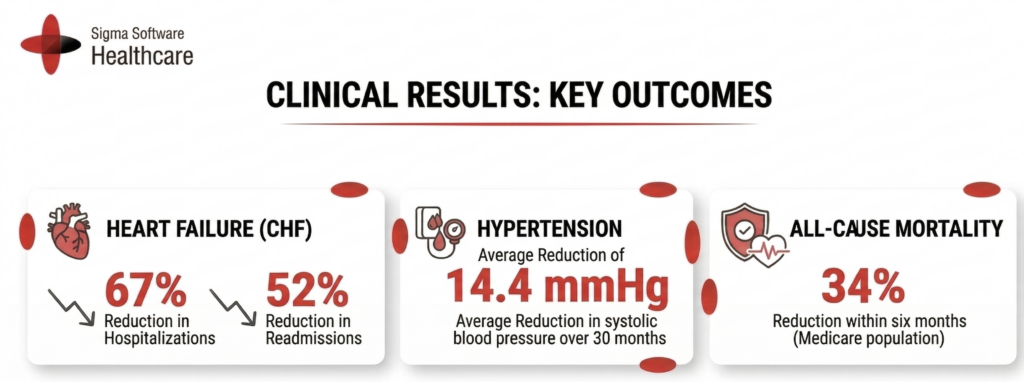
These results reflect a shift from reactive care to continuous, data-informed intervention.
A Shift in Approach: From Data Volume to Clinical Precision
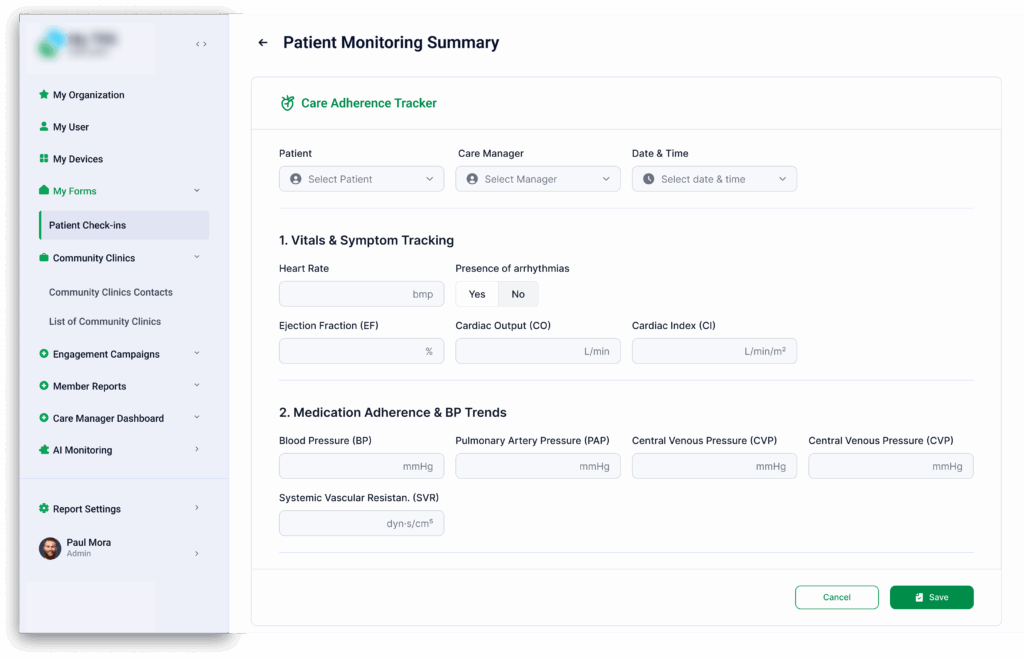
Leading health systems are addressing this challenge by introducing intelligent triage layers within their Remote Patient Monitoring infrastructure.
Advanced AI-driven filtering can reduce alert volume by up to 80%, ensuring that clinicians are only notified of events requiring immediate attention, such as arrhythmias or acute deterioration.
This shift enables:
- More focused clinical attention
- Faster response times
- Reduced cognitive load across care teams
Regulatory Inflection Point: 2026 Requirements
The regulatory landscape is evolving rapidly, placing new demands on both technology and clinical operations.
Under CMS-0057-F and related federal guidance:
- Prior authorization decisions for urgent cases must be delivered within 72 hours
- AI-enabled systems must provide transparent reasoning (“reasoning trace”) for clinical decisions
- Interoperability failures, currently costing the U.S. system $30 billion annually, are under increased scrutiny
Organizations relying on fragmented or opaque systems will face growing compliance and operational risk.
Explore Sigma Software’s Custom Remote Patient Monitoring Software
Key Considerations for 2026 Readiness
Healthcare leaders should evaluate whether their current infrastructure:
- Seamlessly integrates RPM data into the EHR environment
- Minimizes non-actionable alerts and reduces clinician burden
- Provides transparency into AI-driven decision-making
- Delivers critical alerts with minimal latency
Gaps in any of these areas indicate not just inefficiency, but strategic vulnerability.
Sigma Software: Enabling Clinically Aligned Systems
Sigma Software focuses on building the integration layer that aligns technology with clinical workflows and financial objectives.
Our approach emphasizes precision, interoperability, and speed.
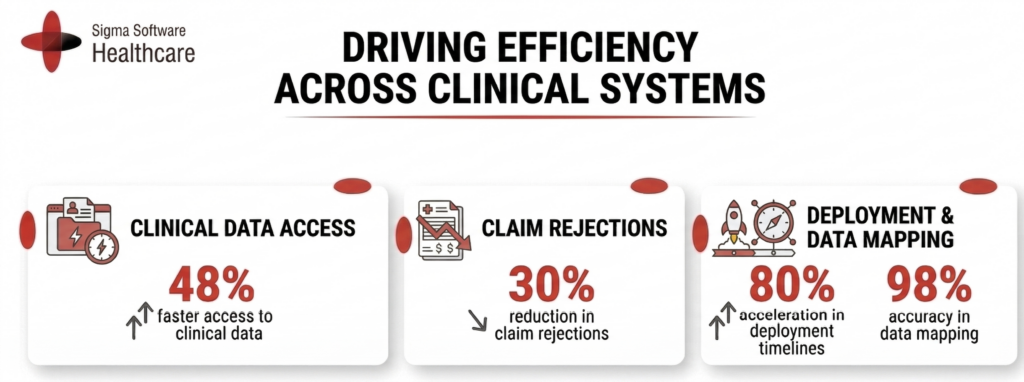
The result is a system environment that supports clinicians rather than overwhelming them.
As RPM adoption accelerates, the differentiator will not be access to data, but the ability to translate that data into clear, actionable insight without burdening clinical teams.
The central question for leadership is no longer whether to invest in RPM, but:
Is your current system strengthening your workforce, or contributing to its attrition?
Want to see what this looks like in practice? Let’s talk.
Ready to Solve Your Value-Based Care Challenge?
Let’s talk about your unique workflows and design a custom digital health solution that supports outcome-based care, improves population health, and aligns with value-based reimbursement models.
Whether you’re navigating HEDIS metrics, improving care coordination, or optimizing performance-based contracts, we can help.
Build Your Custom Implementation Plan
Your implementation plan includes integrations, MVP timelines, and long-term support strategies. We build your value-based care solution around real workflows, compliance requirements, and measurable outcome goals.
Launch and Optimize for Outcome-Based Development
Our solutions combine predictive analytics, AI-driven clinical insights, and secure, interoperable data flows. Whether you need compliance tools, shared savings tracking, or a care coordination engine, we align it with your quality metrics, reimbursement goals, and care delivery model.
Ready to Improve Outcomes with Custom Value-Based Solutions?
We design and build custom software for value-based healthcare, built around your data, workflows, and objectives. Whether you need to unify data, support attribution, or track performance across contracts—we’re here to build what works.
Because value-based care requires customized workflows, integrations, and analytics that generic tools cannot provide.
Yes. It reduces hiring burden, accelerates delivery, and ensures access to specialized value-based care expertise.
Healthcare providers, payers, ACOs, insurance companies, and telehealth organizations.
Yes. We specialize in custom healthcare app development for RPM programs, including device integration, clinical alerts, dashboards, and patient apps.
Absolutely. We design systems to grow across populations, states, or contract types.
Custom Software for Aesthetic Clinics: Overcoming Digital Growth Challenges
Solving the 5 Core Data Infrastructure Problems in Diagnostics
3 AI Execution Gaps Slowing Down Medical Distribution
Resolving Fragmented Clinical Data in Biotech
The 7 Core IT Engineering Bottlenecks in Clinical Stage Biotech (And How to Resolve Them)
Where AI Actually Works in Biotech: Clinical Trials, Genomics, and Drug Discovery
Stay in the loop with everything you need to know.